
FLOOD INSURANCE
Flood insurance for Alabama homes and businesses.
Standard homeowners and commercial property policies exclude flood damage. Localized storms regularly flood properties that FEMA does not classify as high-risk. Flood insurance is a separate policy through the federal NFIP program or a private flood insurer.
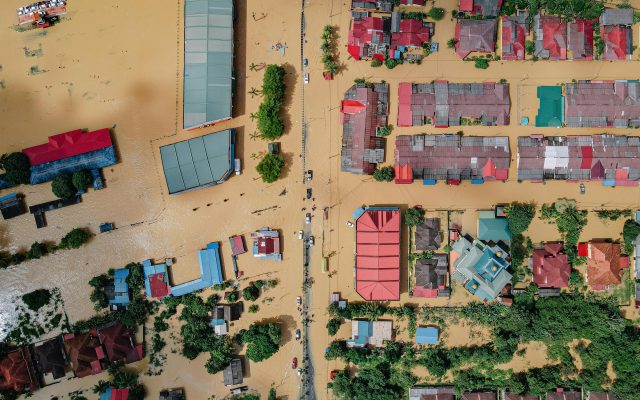
What it covers
What flood insurance covers.
What it covers
Building coverage
Repairs to the building structure, foundation, electrical and plumbing systems, central HVAC, water heaters, built-in appliances, and permanently installed flooring and cabinetry from rising water.
What it covers
Contents coverage
Personal belongings inside the building. Generally limited to actual cash value rather than replacement cost under NFIP. Private flood policies often offer replacement cost on contents.
What it covers
Increased cost of compliance
If a flood damages a building enough that local code requires elevation, demolition, or relocation, this pays toward those mandated costs. Standard NFIP coverage includes up to $30,000 of ICC.
What it covers
Debris removal
Removal of debris caused by the flood, both from your property and debris that floats onto your property from elsewhere. Included within the building or contents limit.
Where policies have edges
What flood insurance does not cover.
Not covered
Damage from water that did not come from a general flood condition
Sewer backup, plumbing leaks, and groundwater seepage that are not the result of a general condition of flooding are not covered by flood insurance. Those losses fall under your homeowners or commercial property policy and may need separate endorsements.
Not covered
Property outside the building
Decks, fences, swimming pools, landscaping, and detached structures other than detached garages are typically excluded. Vehicles are excluded entirely under flood and would fall under comprehensive auto coverage.
Not covered
Loss of use and additional living expenses
NFIP policies do not pay for hotel costs, lost rental income, or additional living expenses while the property is being repaired. Some private flood policies include limited loss of use.
Not covered
Mold not directly caused by the flood
Mold damage that results from a covered flood is generally covered. Mold from poor maintenance, slow leaks, or humidity unrelated to the flood is excluded.
Who needs this
Who needs Alabama Flood Insurance?
Any property owner. FEMA requires flood insurance where a federally-backed loan exists on a property in a high-risk flood zone, but meaningful flood risk exists in many areas outside mapped flood zones. About a quarter of NFIP claims come from properties outside high-risk zones.
What it costs
What can you expect to pay?
Varies by flood zone, elevation, building characteristics, and whether the policy is NFIP or private. Most residential properties pay between $400 and $2,500 per year. Private flood is often less expensive in lower-risk zones.
Not sure how much you need?
Check your coverage before you need it
In Alabama
How does this work in Alabama?
Alabama flood risk splits into two profiles. Coastal Mobile and Baldwin counties face storm surge and hurricane-driven flooding from the Gulf of Mexico -- Mobile alone carries a 26% chance of experiencing a flood over the life of a 30-year mortgage, more than 6 times the likelihood of a fire, and 1 inch of water in a $150,000 home can cause more than $54,000 in damages. Inland, flash flooding from severe thunderstorms is a real risk even outside mapped high-risk flood zones. Alabama participates fully in the National Flood Insurance Program: 433 Alabama communities carry NFIP eligibility, with more than 58,500 active policies providing over $12.3 billion in coverage, coordinated statewide by ADECA's Floodplain Management Unit. A coverage review through Olive Cover can check your specific flood zone and compare NFIP and private flood options.
If You Need to File a Claim
Claims tips
Flood claims have their own rules. Standard homeowners claims practices do not always apply.
- Notify your flood carrier immediately. NFIP and private flood claims have specific notice and proof of loss requirements. Late notice can affect your claim. Get a claim number and adjuster contact in writing.
- Photograph everything before any cleanup. Water lines on walls, every damaged item, the depth of water if visible, and any mud or debris. Wide shots and close-ups. Capture the exterior of the property too.
- Do not throw anything away until the adjuster has seen it. If you must dispose of items for health reasons, photograph them thoroughly and keep a written inventory with estimated values.
- Begin drying out the property to prevent mold. Most policies require you to mitigate further damage. Reasonable costs to dry the property and prevent mold growth are usually reimbursable. Keep all receipts.
- Submit a proof of loss within the required window. NFIP policies require a signed and sworn proof of loss within 60 days of the flood by default, though the deadline is sometimes extended after major events. Missing this deadline can void your claim.
- Ask about increased cost of compliance early. If your community requires you to elevate, demolish, or relocate as a condition of the building permit, ICC coverage may apply. If you are unsure where to start, a coverage review can walk you through it. Raising it during the claim is easier than raising it after.
OUR CARRIER PANEL
Carriers We Work With
The carriers we compare are licensed and regulated in your state. We shop these markets and present the options that match your situation; a licensed advisor reviews the fit with you in a free coverage review.
Common Questions
Alabama Flood Insurance: frequently asked questions
How long does it take for flood insurance to start in Alabama?
A new flood policy through the National Flood Insurance Program (NFIP) usually has a 30-day waiting period before it takes effect. Buying it the week a storm is named is too late for that storm, so plan before hurricane season. Flood coverage is available through Olive Cover.
Do I need flood insurance in Alabama?
No home policy covers flood, so flood insurance is always a separate policy. It is required if you have a federally backed mortgage on a home in a FEMA high-risk flood zone, and worth weighing even outside one. Flood coverage is available through Olive Cover.
Does Alabama participate in the National Flood Insurance Program?
Yes. Alabama has 433 communities participating in the National Flood Insurance Program, with more than 58,500 active NFIP policies providing over $12.3 billion in coverage statewide. Alabama's ADECA (Department of Economic and Community Affairs) coordinates the state's floodplain-management…