
BUILDERS RISK
Builders risk insurance, for the construction period.
A specialized coverage for buildings under construction, major renovation, or remodel. Covers the structure, materials on site, and materials in transit during the build. Required by lenders on most construction loans.
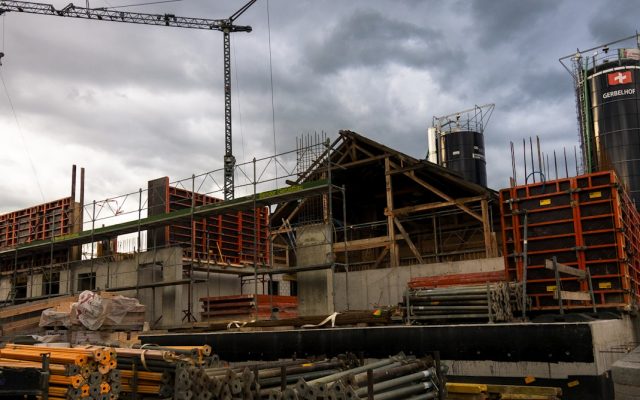
What it covers
What builders risk covers.
What it covers
The structure under construction
The building or structure being built, including foundations, framing, roofing, and all components installed during the construction period. Coverage scales as the construction value grows.
What it covers
Materials on site, in transit, and at temporary storage
Building materials before installation, whether stored on the construction site, in transit to the site, or held at off-site temporary storage. Critical given how much material value sits on a typical construction site.
What it covers
Equipment and machinery installed
HVAC systems, plumbing fixtures, electrical equipment, and other building systems once they are installed at the project. Pre-installation equipment may be covered separately under an installation floater, which sits on an inland marine policy.
What it covers
Soft costs and lost income
Some builders risk policies include soft costs (engineering fees, permits, additional financing costs) and lost rental income if construction delays a planned rental or sale. These come as optional endorsements with specific limits.
Where policies have edges
Where builders risk policies have edges.
Not covered
Faulty workmanship and design errors
The defective workmanship itself is excluded, though resulting damage to other parts of the structure may be covered. Defective design errors are usually excluded entirely; professional liability handles those.
Not covered
Tools and equipment owned by contractors
Contractor-owned equipment (tools, power equipment, mobile machinery) is not covered under builders risk. That belongs on the contractor's inland marine policy.
Not covered
Earthquake and flood
Standard exclusions. Coastal construction sites often need separate flood or wind endorsements. Earthquake risk is rarely material for most coastal Southeast sites, but requirements vary by location.
Not covered
Vandalism after construction completion
Builders risk ends at the earlier of substantial completion or occupancy. After that, standard commercial property or homeowners coverage takes over.
Who needs this
Who needs Builders Risk Insurance?
Property owners building new construction, general contractors building on behalf of owners, homebuilders constructing spec or pre-sold homes, real-estate investors building rental properties, commercial developers, and lenders requiring builders risk as a condition of construction loans.
What it costs
What can you expect to pay?
Builders risk pricing is typically a percentage of the total construction value, usually 1 to 4 percent of the project cost, depending on construction type, location, project complexity, and term length. Most residential builders risk policies for single-family homes run between $1,200 and $5,000 for a 6 to 12 month policy.
Requirements by state
How does this work in your state?
Builders Risk Insurance rules, regulatory requirements, and available coverage vary by state. Send us your state and details through a free coverage review and we will confirm what applies to you.
If You Need to File a Claim
Claims tips
First Steps
Report the loss to your carrier the same day the damage occurs. Construction sites change fast, crews may need to move materials, shore up exposed framing, or resume work, so contact your insurer before any stabilization or cleanup begins. Stopping work entirely is not required, but document the site condition first.
What to Document
- Photographs and video of all affected structural components: foundations, framing, roofing decking, sheathing, any installed finish materials
- The construction schedule and completion percentage at the date of loss, carriers use this to value the work in place
- Receipts, invoices, or purchase orders for materials on-site or in transit that were damaged
- Subcontractor agreements identifying who supplied labor and materials for each affected section
- Any site logs, superintendent notes, or inspection reports from the days surrounding the loss
Coverage Boundaries Worth Knowing
Builders risk covers physical damage to the structure under construction, not defective workmanship itself. If a subcontractor installs framing incorrectly and that causes a roof section to collapse in a storm, the resulting damage to adjacent finished work is typically covered, the faulty framing installation is not. Contractor-owned tools and equipment on-site are also excluded; those fall under the contractor's own inland marine or equipment policy.
Common Mistakes
Waiting until a construction draw or inspection to report damage, carriers may dispute whether the loss occurred before or after coverage was in force for that phase. Assuming the policy automatically extends when a project runs over schedule, most builders risk policies have a fixed expiration tied to the projected completion date, and a project running long needs an endorsement before that date passes, not after.
When to Call Us
Any time a loss involves structural components where the cause is disputed, weather damage versus workmanship, for example, or when the project schedule has shifted and you are unsure whether the policy term still covers the work in progress. We can help clarify what the policy covers at the current construction phase and what documentation the carrier will need to process the claim.
OUR CARRIER PANEL
Carriers We Work With
The carriers we compare are licensed and regulated in your state. We shop these markets and present the options that match your situation; a licensed advisor reviews the fit with you in a free coverage review.
Carriers reviewed by Olive Cover that write this coverage. An honest look at their appetite, strengths, and fit:
Common Questions
Builders Risk Insurance: frequently asked questions
When does builders risk coverage end?
At the earlier of substantial completion, occupancy, or a fixed end date in the policy. After that, standard homeowners or commercial property must take over.
Who is responsible for builders risk: owner or contractor?
Depends on the contract. Most residential construction puts the owner in charge of builders risk (it's their building). Commercial projects often have the contractor carry it. Always written into the construction contract.